The landscape of search has changed dramatically, and the software used to navigate it has evolved just as fast. Modern search engine optimization requires moving beyond manual data exports and disjointed workflows. Instead, the focus has shifted toward tools that can process massive amounts of site data, identify clear opportunities, and execute those strategies at scale.
Understanding which platform fits your specific workflow means looking past the hype of simple text generators. The most effective ai seo tools integrate deeply with your existing site data to drive measurable performance, maintain topical authority, and protect against cannibalization.
What are AI SEO tools?
AI SEO tools are software applications that use machine learning and natural language processing to automate, scale, and improve search engine optimization tasks. Unlike early generative AI applications that simply produced text based on a prompt, modern SEO tools embed artificial intelligence directly into complex technical and strategic workflows.
How AI supports keyword research, content, and optimization
Artificial intelligence has transformed keyword research from a manual process of sorting spreadsheets into dynamic search intent detection. These tools analyze live SERP data to map the exact angle, format, and depth required to compete for a target phrase. When it comes to content and optimization, AI evaluates top-ranking pages to extract entity relationships and semantic gaps, guiding writers—or AI generation models—toward comprehensive coverage.
Where AI helps most in modern SEO workflows
The most immediate impact of AI in SEO lies in data processing and pattern recognition. Algorithms can process thousands of Google Search Console queries in seconds to execute accurate keyword clustering, turning raw data into a prioritized content calendar. AI also excels at content brief generation, automatically pulling heading structures and target entities from competitors. In advanced implementations, AI handles internal linking automation, mapping relationships between new drafts and existing site content to pass authority efficiently.
What AI still cannot do well without human oversight
Despite rapid advancements, artificial intelligence struggles with strategic positioning and unique brand perspective. Generative models cannot conduct original research, share genuine first-hand experiences, or interview subject matter experts. Without a human SEO professional guiding the strategy, heavily automated content often lacks the distinct point of view required to convert readers into customers. AI also requires oversight when dealing with highly technical or nuanced B2B topics where factual precision is absolute.
How to choose the right ai tools for seo
Selecting the right platform depends entirely on the bottlenecks in your current processes. The market is saturated with platforms claiming to handle every aspect of search, but true value comes from solving specific operational hurdles.
Start with the workflow you need to improve
Before evaluating features, define the exact problem you need to solve. If your writers struggle to hit target entities, an optimization tool makes sense. If your bottleneck is finding low-competition opportunities hidden in your own metrics, you need a platform built around Google Search Console integration. Identifying the primary constraint in your content pipeline ensures you invest in a solution that will actually get used.
Look for first-party data sources and integrations
The outputs of any AI model are only as reliable as the inputs they receive. Generic AI writers fail because they operate in a vacuum. The most powerful platforms connect directly to your site’s data. Tools that integrate with Search Console or analytics platforms can ground their recommendations in how search engines currently view and reward your domain.
Prioritize tools that fit your team size and SEO maturity
A sprawling enterprise platform with complex programmatic SEO capabilities will overwhelm a solo consultant or a lean marketing team. Conversely, a simple prompt-based writer will frustrate an agency managing multiple complex client domains. Match the platform’s sophistication to your team’s technical capacity and the scale at which you need to publish.
Watch for overlap between writing, research, and optimization features
Modern tech stacks often suffer from feature bloat. You might find yourself paying for a keyword research tool, an on-page optimizer, and a content generator that all technically offer the same overlapping capabilities. Map out the features of your prospective ai tools for seo against your existing subscriptions to consolidate costs and streamline your daily operations.
The best ai seo tools by use case
The most efficient way to build an SEO stack is to select specialized tools that excel at specific functions rather than relying on a single platform that does everything poorly.
Best for content optimization and on-page scoring
When a draft needs to align perfectly with the semantic expectations of a search engine, tools like Surfer SEO and Clearscope remain the standard. They analyze the current top-ranking pages for a specific query and provide a real-time score based on entity inclusion, word count, and structural formatting. These platforms remove the guesswork from determining if a page is comprehensive enough to compete.
Best for keyword research and SERP analysis
Understanding what users actually want when they type a query requires sophisticated SERP analysis. Leading SEO suites utilize AI to parse user behavior, search volume trends, and competitor backlink profiles. This helps teams look past broad, highly competitive terms to find the specific long-tail variations that drive actual revenue.
Best for clustering and content planning
Turning a list of ten thousand keywords into a structured editorial calendar is a massive undertaking. Modern clustering tools group keywords based on SERP similarity rather than just textual overlap. This ensures that you only create one page for a specific topic, grouping variations together to build stronger, more authoritative pillar content.
Best for technical SEO and auditing
Technical SEO requires monitoring millions of data points across massive websites. AI-driven auditing tools crawl domains to detect complex issues like render-blocking scripts, infinite redirect loops, and indexing anomalies. Machine learning helps prioritize these technical fixes based on their potential impact on organic traffic.
Best for AI search visibility and GEO tracking
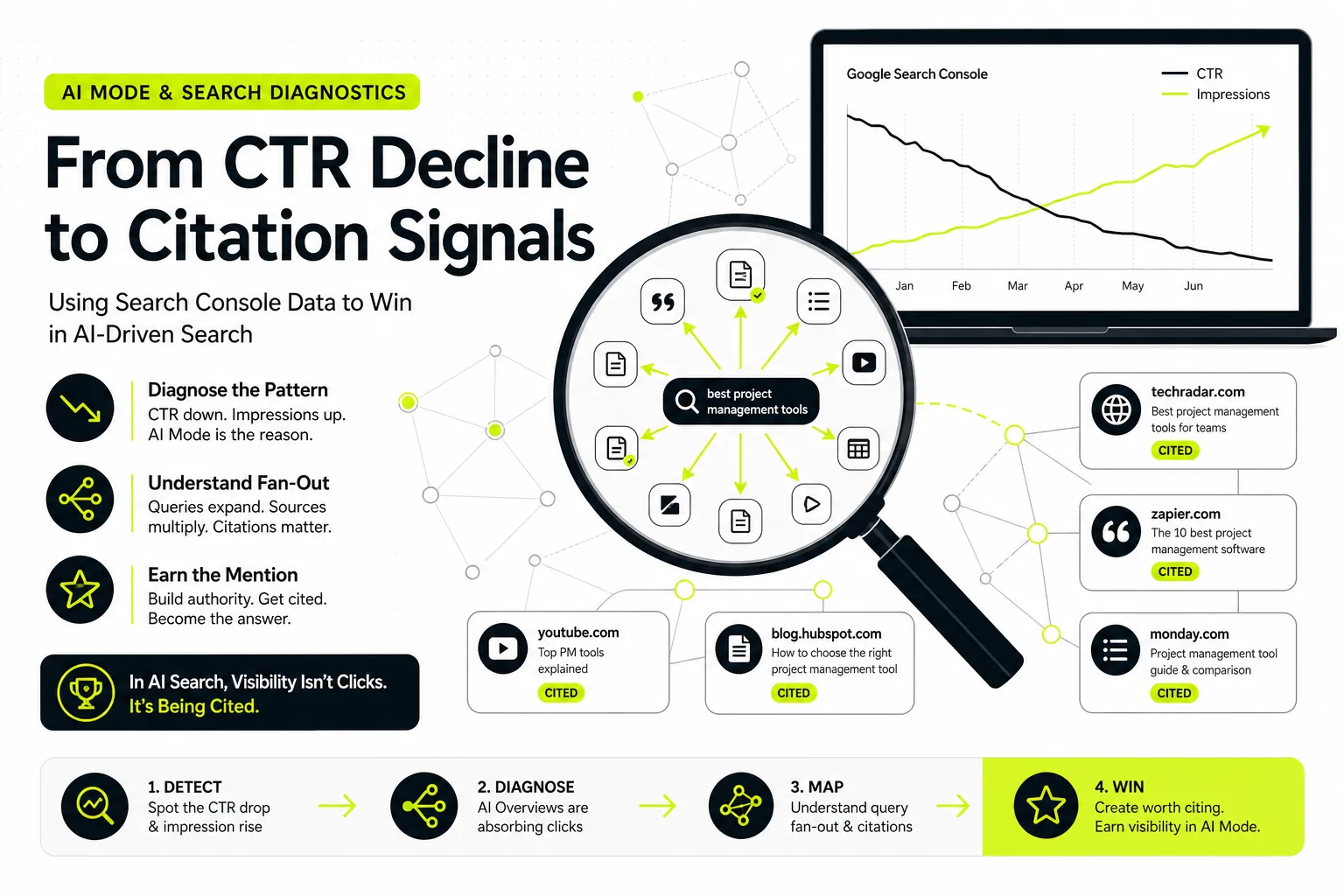
As search engines integrate generative responses directly into results, tracking traditional rank is no longer enough. AI visibility and Generative Engine Optimization (GEO) tracking tools monitor how often your brand is cited by engines like Perplexity, ChatGPT search, and Google’s AI Overviews. This provides a clearer picture of brand presence in a zero-click search environment.
Best for programmatic SEO and scalable publishing
When an architecture requires thousands of localized or template-driven pages, programmatic SEO tools leverage databases and AI to deploy content at scale. These platforms automate the variation of copy across massive datasets, allowing directory sites and local aggregators to capture long-tail traffic efficiently.
How ai driven seo tools compare on the features that matter
Evaluating software requires looking beneath the marketing copy to understand how a tool actually processes data. The mechanics of the software dictate the quality of the strategy it outputs.
Data quality: first-party vs third-party inputs
Most ai driven seo tools rely on scraped, third-party data that lags behind actual search trends. Platforms that require you to connect your own Google Search Console account operate on real, first-party data. This distinction is critical: first-party data reflects exactly how your specific site is performing, while third-party data offers only a generalized estimate of the market.
Workflow depth: draft generation vs full SEO system
Many platforms market themselves as complete SEO solutions but are effectively just interfaces built over standard large language models like Claude or ChatGPT. A true SEO system goes deeper, offering project management, brief creation, live scoring, and performance tracking. Draft generation is a feature; a full SEO system is a workflow.
Internal linking, cannibalization, and site context
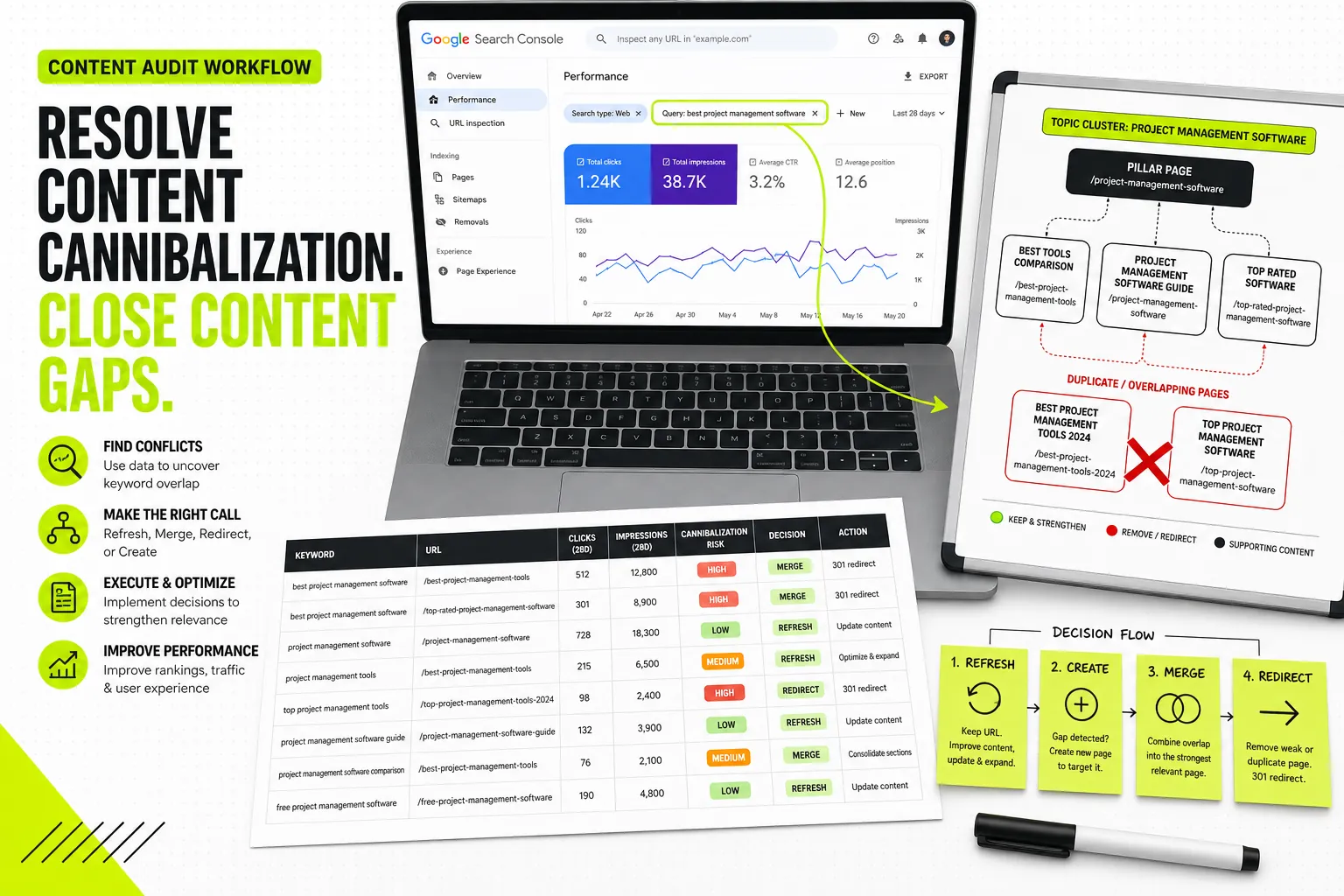
Creating a great article is useless if it competes with a page you already published three years ago. Advanced platforms maintain full-site context. They scan your entire indexed footprint for cannibalization detection before generating new content. Furthermore, they understand your site’s architecture well enough to recommend or automate precise internal links, ensuring new pages integrate seamlessly into your topical map.
Pricing logic: free, mid-market, and enterprise considerations
Pricing models vary wildly based on API costs and feature depth. Free or low-cost tools generally offer restricted, shared-resource models suitable for testing concepts. Mid-market solutions often charge per query or per draft, which works well for standard editorial rhythms. Enterprise tools require custom contracts but offer unrestricted API access, custom model training, and dedicated support for massive publishing operations.
Which ai tools for seo optimization fit different team types
The ideal tool stack shifts based on who is doing the work and the volume of content being produced.
Best picks for solo SEOs and consultants
Consultants need speed and flexibility. Tools that offer all-in-one dashboards for quick audits, rapid brief generation, and straightforward on-page optimization keep overhead low. A solo operator benefits from platforms that act as an assistant, handling the heavy lifting of data formatting so the consultant can focus on strategy and client communication.
Best picks for content teams at SaaS companies
B2B SaaS teams operate in highly competitive, low-volume niches where precision matters. These teams require ai tools for seo optimization that prioritize deep topical authority and exact search intent detection. Integrations with existing content management systems and collaboration features for editors, subject matter experts, and writers are essential.
Best picks for agencies managing multiple sites
Agencies must balance scale with distinct client voices. The ideal platforms for agencies offer robust workspace separation, white-label reporting, and the ability to train AI models on specific brand guidelines. Managing multiple domains also requires strict cannibalization checks to ensure a new account executive doesn’t accidentally overwrite an existing strategy.
Best picks for teams scaling editorial output
When a publisher needs to move from ten articles a month to a hundred, workflow automation becomes the primary requirement. Teams scaling output need bulk processing capabilities, programmatic integrations, and automated internal linking to ensure that the increased velocity doesn’t result in a messy, disjointed site architecture.
A practical AI SEO workflow for teams using Search Console data
To see real ROI from AI, you have to connect it to an actual workflow. Using Search Console data as the foundation ensures every piece of content published has a strategic purpose.
Find opportunities from Search Console and site data
Start by identifying queries where your site ranks between positions 11 and 30. These are topics search engines already associate with your domain but lack the depth or authority to break onto the first page. Exporting this data provides a prioritized list of quick-win opportunities.
Cluster keywords by topic and intent
Instead of attacking those queries individually, use an AI clustering tool to group them. This prevents thin content creation. By grouping a primary target keyword with its related secondary phrases, you define the exact scope required for a comprehensive, authoritative pillar page.
Build briefs and drafts with page-level context
With your clusters defined, generate content briefs that outline the required headings, questions to answer, and entities to include. When generating drafts, ensure the AI has access to your brand guidelines and the specific context of the cluster. The goal is to produce a highly structured foundation that a human editor can refine.
Add internal links and reduce cannibalization risk
Before publishing, map the new content against your existing site structure. AI tools can automatically identify natural anchor text opportunities in older posts to point toward the new page, transferring established authority. Simultaneously, verify that the new page does not duplicate the exact intent of an older, established URL.
Measure performance and refine content
SEO is iterative. Once the content is live, monitor its performance back in Search Console. Track how quickly the new page acquires impressions for the target cluster. If the page ranks but fails to generate clicks, refine the meta titles; if it drives traffic but fails to convert, adjust the on-page call-to-actions.
Where Dango fits in the AI SEO tools landscape
Dango is built specifically for teams that want to turn their raw data into published, high-performing content without the typical operational friction. It positions itself as a Search Console native platform designed to remove guesswork from the optimization process.
Why a GSC-native workflow changes content prioritization
By connecting directly to your Google Search Console account, Dango transforms analytics into a clear to-do list. Instead of relying on third-party estimates of what might work, a GSC-native workflow prioritizes content updates and new drafts based on the exact queries search engines are already testing your site against.
How site-aware generation improves relevance
Generic AI writes in a vacuum. Dango operates with full-site context. Because the platform understands the entirety of your indexed content, it generates drafts that align with your specific domain authority and search intent. This site-aware approach ensures the output is highly relevant and structurally sound out of the gate.
How internal linking automation supports scalable growth
Building topical authority requires a tightly woven site architecture. Dango automates this process by identifying optimal internal linking opportunities across your domain. By intelligently connecting new drafts to established pages, the platform ensures link equity flows efficiently, supporting scalable growth without hours of manual site-searching.
Who should evaluate Dango first
Dango is tailored for B2B marketing teams, growth leads, and website owners who already have a baseline of traffic and GSC data. If your team is struggling to scale content production, constantly battling keyword cannibalization, or wasting hours manually digging through Search Console exports, Dango offers a streamlined, pragmatic solution.
Common mistakes when evaluating AI SEO tools
Investing in the wrong software leads to wasted budget and stagnant traffic. Avoid these frequent pitfalls during the procurement process.
Choosing based on writing quality alone
Evaluating an SEO platform purely on how well its AI mimics human prose misses the point. Large language models update constantly; writing quality will continually normalize across the industry. The true value of a tool lies in its data pipelines, workflow integrations, and strategic capabilities, not just its syntax.
Ignoring workflow fragmentation across tools
Purchasing five different best-in-class tools often results in a fractured workflow where data gets lost moving between platforms. If a team has to export CSVs from a research tool, import them into a clustering tool, and then manually copy briefs into a writing tool, efficiency drops to zero. Prioritize platforms that consolidate these steps.
Overlooking site context and internal linking
Failing to account for your existing content is the fastest way to flatline your organic growth. Tools that do not offer full-site context will inevitably suggest topics you have already covered, leading to severe cannibalization and a diluted internal linking structure.
Confusing AI assistance with SEO strategy
AI accelerates execution, but it does not invent strategy. Relying on an algorithm to dictate your brand’s market positioning or unique value proposition results in generic, uninspired marketing. AI should handle data processing, clustering, and structural drafting, leaving human marketers to focus on narrative, perspective, and conversion.
Final recommendations: how to pick the best AI SEO tool for your stack
The best tool for your operation depends on exactly where your current process breaks down. Focus on solving your specific bottlenecks to build a resilient, efficient stack.
If you need better content briefs
Look toward platforms that specialize in deep SERP analysis and entity extraction. Tools like Clearscope and Surfer SEO excel at providing writers with the exact semantic requirements needed to satisfy search intent and cover a topic comprehensively.
If you need stronger optimization guidance
When the goal is to improve the hit rate of existing content, prioritize software that offers real-time, on-page scoring. Writers need immediate feedback on structural formatting, keyword density, and readability to ensure every draft meets a baseline of technical quality before publication.
If you need scalable SEO operations
Teams publishing at high volume require platforms that support bulk actions and strict cannibalization checks. Look for enterprise-grade solutions that offer robust API access, team collaboration features, and programmable workflows to maintain quality as output increases.
If you want one workflow centered on Search Console
If you want to eliminate the noise of third-party metrics and base your entire content strategy on real performance data, you need a Search Console native platform. For teams looking to seamlessly translate GSC insights into clustered topics, automated internal links, and site-aware drafts, Dango provides a direct, highly technical workflow designed to ship content that actually ranks.
Frequently Asked Questions
Are AI SEO tools worth it for small teams?
Yes. For small teams, AI SEO tools act as a force multiplier. They automate time-consuming tasks like keyword clustering, data analysis, and brief creation, allowing lean teams to execute strategies that previously required dedicated, full-time staff.
Can AI SEO tools improve rankings without changing my content strategy?
AI tools can optimize existing content, fix technical issues, and improve internal linking, which can yield ranking bumps. However, sustained long-term growth still requires a sound underlying content strategy that addresses your specific audience’s needs and search intent.
What is the difference between AI writing tools and AI SEO tools?
AI writing tools like ChatGPT or Claude focus primarily on text generation based on user prompts. AI SEO tools integrate search data, analyze SERPs, track performance, and provide structural guidance to ensure the content is optimized for search engines, not just grammatically correct.
Do AI SEO tools work better with Google Search Console data?
Absolutely. Tools that integrate with Google Search Console base their recommendations on precise, first-party data showing exactly how search engines currently interact with your site. This is vastly more accurate than relying on broad, third-party industry estimates.
Which AI SEO tools are best for internal linking?
Platforms that feature full-site indexing and site-aware context are best for internal linking. Tools like Dango scan your entire published footprint to identify the most relevant, natural anchor text opportunities, automating a process that is otherwise highly manual.
Can AI SEO tools help prevent keyword cannibalization?
Yes, but only if they have site-wide context. Advanced AI SEO tools analyze your entire domain before generating new briefs or drafts, alerting you if a proposed topic too closely matches the search intent of a page you have already published.
Are free AI SEO tools enough for professional SEO work?
Free tools are useful for ad-hoc tasks, basic prompt generation, or learning the ropes, but they lack the API integrations, site-wide context, and data processing capabilities required for managing professional, high-stakes SEO campaigns.
How should agencies evaluate AI SEO tools for multiple client sites?
Agencies should prioritize platforms that offer clear workspace segregation, strict cannibalization detection per domain, and the ability to set distinct brand voice parameters for different clients. Reliable GSC integration is also critical to ensure strategies are grounded in each client’s unique performance data.