Google AI Mode rewired the question every SEO team has to answer before buying tooling. It’s no longer just “where do we rank?” but “does Google’s generative layer pull our content into its answers, cite our URLs, and surface our brand when someone asks a conversational question?” Those are different signals, and most legacy rank trackers were never built to measure them.
The challenge with picking SEO software for AI Mode is that the category is crowded with two very different kinds of products: AI visibility monitors that tell you whether you’re being cited, and content production systems that actually move the needle on that visibility. Buying the first without the second leaves you with dashboards full of problems you can’t fix. This guide takes a GSC-first stance—evaluate tools by whether they ground decisions in your own search data—and walks through the categories, scoring criteria, individual platforms, and a workflow that connects monitoring to action.
If you want the broader strategic view of AI-assisted content tooling, our companion piece on AI SEO tools for content workflows covers the wider landscape. This article stays narrowly focused on AI Mode visibility and the software decisions specific to it.
What AI Mode Changes About SEO Software Selection
AI Mode is Google’s conversational, generative search experience—an interface where a user asks a complex question and Google synthesizes an answer from multiple sources, citing some of them inline. It sits alongside AI Overviews (the summarized blocks at the top of traditional results) and shares the same underlying retrieval mechanics. For SEO software, that shift matters because the unit of success is no longer a blue-link position. It’s whether your page becomes a source the model trusts enough to quote.
None of this erases the fundamentals. Crawlability, topical relevance, authority, and internal linking still decide whether your content is even eligible to be retrieved. AI Mode changes execution speed and measurement, not the underlying physics—our breakdown of the foundational SEO framework for AI workflows makes the case that GEO and AEO are outcomes of strong traditional SEO rather than separate disciplines. Keep that in mind as you evaluate tools that promise AI Mode “optimization” as if it were a standalone skill.
Why AI Mode visibility is not the same as traditional rankings
A page can rank #4 organically and never appear in an AI Mode answer, or rank #18 and get cited because it answers a sub-question precisely. AI Mode decomposes a query into intents, retrieves passages that satisfy each one, and assembles a response. That means passage-level relevance, entity coverage, and answer clarity can outweigh raw ranking position. Software that only reports average position will miss this entirely—you need tools that track citations and URL inclusion in generated answers, not just SERP coordinates.
How AI Mode, AI Overviews, AEO, and GEO overlap
These terms describe overlapping layers of the same shift. AI Overviews are the summary blocks; AI Mode is the full conversational experience. Answer Engine Optimization (AEO) is the practice of structuring content to be the direct answer to a question. Generative Engine Optimization (GEO) is the broader discipline of earning inclusion in generative outputs across Google, ChatGPT, Perplexity, and others. In practice, the same content investments—clear answer blocks, strong entity coverage, schema, citations—serve all of them. You don’t need four separate strategies; you need content grounded well enough to be retrieved across all four surfaces.
Where standard rank trackers still help—and where they fall short
Rank trackers remain useful for trend detection, competitive benchmarking, and validating that traditional organic positions support AI eligibility. Where they fall short is the generative layer: most can’t tell you whether your URL was cited in an AI Mode response, how often your brand appears in AI answers, or what sentiment those mentions carry. Treat rank tracking as a necessary baseline, not a complete AI Mode measurement system.
Quick Comparison: Best SEO Software for AI Mode in 2026
The tools below cluster into clear roles. Some monitor visibility, some optimize content, and a few—like Dango—work upstream on the production decisions that determine whether you earn AI Mode inclusion in the first place.
Comparison table: best use case, AI Mode coverage, data source, pricing model, and limitations
| Tool | Best use case | AI Mode / AI Overview coverage | Primary data source | Pricing model | Key limitation |
|---|---|---|---|---|---|
| Semrush One | All-in-one SEO suite with AI visibility add-ons | AI Overview tracking, expanding AI visibility | Third-party crawl + some integrations | Tiered subscription, premium add-ons | Breadth over depth; AI features still maturing |
| SE Ranking AI Overview Tracker | Practical AI SERP monitoring | AI Overview presence/citation tracking | Third-party SERP crawl | Subscription | Limited content production workflow |
| Rankscale.ai | Focused AI search visibility | AI Mode + multi-engine citations | Prompt-based crawl | Subscription | Monitoring only, no content ops |
| Writesonic | AI search visibility + content writing | AI visibility tracking + drafting | Mixed | Subscription | Writing-first; data depth varies |
| Otterly AI | Brand monitoring across AI answers | Multi-engine brand/citation tracking | Prompt monitoring | Subscription | No content production |
| Peec AI | AI visibility + competitive tracking | AI answer share-of-voice | Prompt monitoring | Subscription | Monitoring-focused |
| Surfer SEO | Content optimization for AI-era SERPs | Indirect (content scoring) | SERP analysis | Subscription | No AI citation tracking |
| Search Atlas | SEO workflow automation | Some AI features | Third-party + crawl | Subscription | Broad scope, variable depth |
| Dango | GSC-first clustering, briefs, articles, internal linking | Drives eligibility via first-party data | Google Search Console (first-party) | $99–$299/mo | Production-focused, not a citation monitor |
Best for AI visibility tracking
For pure citation and brand-mention monitoring across AI Mode and other answer engines, dedicated trackers like Rankscale.ai, Otterly AI, and Peec AI lead. They run prompt sets, capture which sources get cited, and report share of voice. Choose these when your primary question is “are we showing up?”
Best for GSC-first content planning
When the question is “what should we create or fix to earn that visibility?”, Dango’s GSC-first approach is the standout. It works from your own impressions, positions, and queries rather than third-party volume estimates—turning real search data into prioritized topic clusters and briefs.
Best for content optimization and briefs
Surfer SEO and Writesonic excel at on-page optimization and draft generation. They help you shape content to cover the entities and questions AI Mode rewards, though neither connects optimization to first-party opportunity data.
Best for agencies managing multiple domains
Semrush One and Search Atlas offer the multi-domain dashboards, white-label reporting, and breadth agencies need. Dango’s Professional tier also serves agencies managing several client sites with a leaner, production-focused workflow.
How to Evaluate SEO Software for AI Mode
A scoring framework keeps your evaluation honest. Score each tool 1–5 on the criteria below, weight them by what your team actually needs, and the right choice usually becomes obvious.
AI citation and URL tracking accuracy
The core question for any AI visibility tool: when your content is cited in an AI Mode answer, does the tool catch it—and the specific URL? Test this against pages you know are cited. Tools that only report domain-level mentions are less useful than those that track exact URL citation, which tells you which assets are working.
Prompt, query, and topic coverage
AI visibility tools run prompts to sample what answers Google and other engines generate. Coverage matters: a tool tracking 20 prompts gives a thin picture; one tracking hundreds across your topic clusters gives a representative view. Check whether you can add custom prompts mapped to your real queries rather than relying on the vendor’s defaults.
Google AI Overview and AI Mode monitoring
Confirm the tool actually monitors both surfaces, not just one. SE Ranking’s AI Overview Tracker, for example, focuses on AI Overview presence and citations. AI Mode is conversational and harder to sample consistently, so ask vendors how they capture it and how often.
Integration with Google Search Console
This is where first-party versus third-party data becomes decisive. Tools that integrate GSC ground their recommendations in queries you’re already earning impressions for—the queries Google is testing your site against right now. Dango is built entirely on this principle: it connects in one click and uses your GSC data as context across every tool. Third-party-only platforms estimate; GSC-native ones measure.
Brand mention, sentiment, and share-of-voice reporting
For brand teams, the value is knowing not just whether you’re mentioned but how. Sentiment analysis flags whether AI answers describe you positively or negatively, and share-of-voice reporting shows how often you appear relative to competitors across a prompt set. Otterly AI and Peec AI specialize here.
Content workflow depth: briefs, clustering, internal links, and refreshes
Monitoring tells you the problem; workflow depth lets you solve it. Evaluate whether a tool moves from insight to brief to draft to internal linking to refresh tracking. Most monitors stop at insight. Production platforms like Dango carry through clustering, site-aware briefs, full drafts, and automated internal link suggestions.
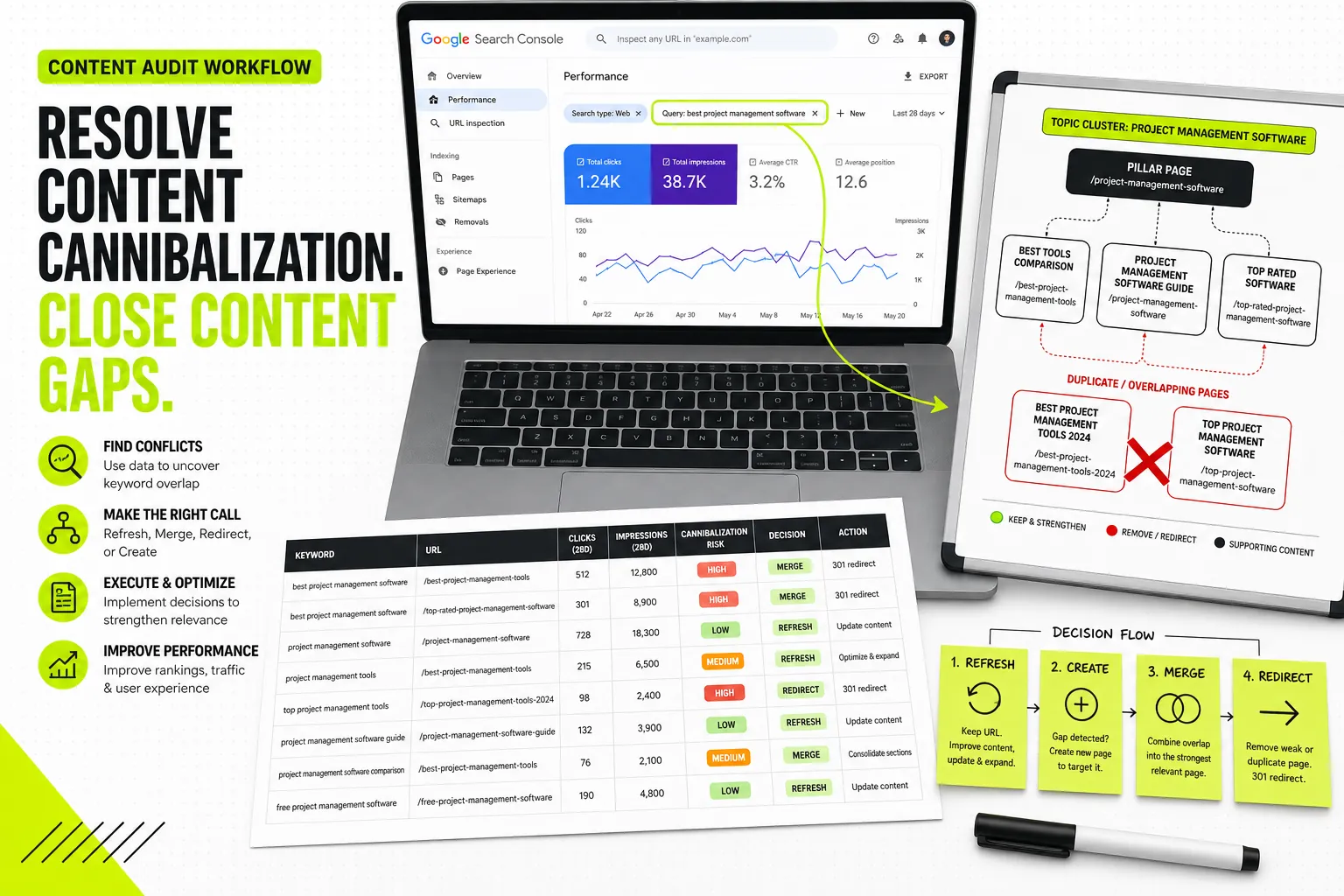
Cannibalization detection before publishing more AI-assisted content
AI makes it trivial to publish more pages—and trivial to create cannibalization, where multiple pages compete for the same query. A tool that understands your entire indexed content set can warn you before you publish a page that splits authority. This is a structural advantage of site-aware, GSC-first platforms over standalone writers.
The Best SEO Software Categories for AI Mode
Before comparing individual products, it helps to see the categories they fall into. Most stacks blend two or three.
AI visibility platforms for citations and brand monitoring
These exist to answer “are we being cited and mentioned in AI answers?” They run prompt panels, capture citations and brand mentions, score sentiment, and report share of voice. Rankscale.ai, Otterly AI, and Peec AI live here. They’re diagnostic, not corrective.
Traditional SEO suites adding AI visibility features
Established platforms like Semrush One and Search Atlas bolt AI Overview tracking onto mature keyword, backlink, and crawl toolsets. Good if you want one bill and broad coverage; the AI-specific depth typically lags dedicated trackers.
AI content optimization platforms
Surfer SEO and Writesonic help you write and optimize content that AI Mode is more likely to retrieve—covering the right entities, answering sub-questions, and matching search intent. They improve the content itself rather than monitoring outcomes.
GSC-first SEO workflow tools
This category prioritizes your own search data as the starting point. Dango is the clearest example: it discovers opportunities from GSC impressions and positions, clusters real queries, and generates briefs calibrated to your actual rankings. The advantage is that every recommendation is grounded in evidence Google has already given you.
AI agents and automation layers for recurring SEO tasks
Beyond point tools, agentic systems orchestrate multi-step workflows—opportunity discovery, brief generation, internal linking, rank decay monitoring—on a recurring schedule with human approval checkpoints. If you want to move past one-off tool use into automated operations, our guide to AI agent workflows for SEO teams covers how to build these safely, including QA gates and a 30-day pilot plan.
Tool Reviews: Which Platforms Are Worth Considering
These short reviews focus on AI Mode relevance and where each tool fits in a stack.
Semrush One: strong SEO suite with AI visibility expansion
Semrush One brings the depth of a mature suite—keyword research, competitive analysis, backlinks, technical audits—with growing AI Overview and AI visibility tracking. It’s a reasonable hub for teams that want consolidation, but its AI Mode features are still catching up to dedicated trackers, and it relies on third-party estimates rather than your first-party data.
SE Ranking AI Overview Tracker: practical AI SERP monitoring
SE Ranking’s AI Overview Tracker is a pragmatic, affordable way to monitor whether your keywords trigger AI Overviews and whether your domain is cited within them. It’s strong on AI SERP visibility but thin on content production, so pair it with a workflow tool.
Rankscale.ai: focused AI search visibility tracking
Rankscale.ai concentrates on AI search visibility across multiple engines, tracking citations and mentions at the URL level. If your priority is clean, focused citation analysis rather than a broad suite, it’s worth a trial. As a monitor, it tells you what’s happening but not what to build next.
Writesonic: AI search visibility plus content workflows
Writesonic blends AI visibility tracking with content generation, aiming to close the loop between insight and output. The drafting is capable; the data depth and citation accuracy vary, so validate against pages you can verify. Good for teams that want monitoring and writing under one roof.
Otterly AI: monitoring brand visibility across AI answers
Otterly AI specializes in tracking how your brand appears across AI answer engines—mentions, citations, and sentiment. For brand and PR-adjacent teams who care about narrative as much as traffic, its sentiment and share-of-voice reporting is a strength. It does not produce content.
Peec AI: AI visibility and competitive tracking
Peec AI focuses on AI visibility with a competitive lens, showing your share of voice in AI answers against rivals across a prompt set. Useful for teams that benchmark heavily. Like other monitors, it diagnoses rather than fixes.
Surfer SEO: content optimization for AI-era SERPs
Surfer SEO remains a leading on-page optimization tool, scoring drafts against SERP competitors for entity and term coverage. In the AI era, that coverage helps content become retrievable. It doesn’t track AI citations or work from your GSC data, so it sits as an optimization layer, not a planning or monitoring one.
Search Atlas: SEO workflow automation with AI features
Search Atlas offers a broad platform with workflow automation and some AI capabilities, aimed at agencies and teams wanting consolidation. Depth varies by feature; evaluate the specific modules you’ll rely on rather than the marketing breadth.
Dango: GSC-first clustering, briefs, articles, and internal linking
Dango takes a different starting point than every tool above. Instead of estimating opportunity from third-party data or monitoring AI answers after the fact, it connects to Google Search Console and turns your impressions, positions, and queries into a prioritized content plan. Its workflow runs Connect & Discover → Cluster & Prioritize → Create & Rank: it finds high-impression, low-click queries and pages sitting in positions 11–30 (the quick wins), clusters real queries into topic systems, then generates site-aware briefs and full drafts with built-in internal linking.
Because it understands your entire indexed content set, it flags cannibalization before you publish. Dango isn’t an AI citation monitor—it’s the production engine that earns the eligibility those monitors measure. Starter pricing is $99/mo for individual SEOs and $299/mo for the Professional tier built for agencies managing multiple domains.
A GSC-First Workflow for Improving AI Mode Visibility
Monitoring tools tell you whether you appear in AI answers. They don’t get you there. This workflow does, and it starts with data you already own.
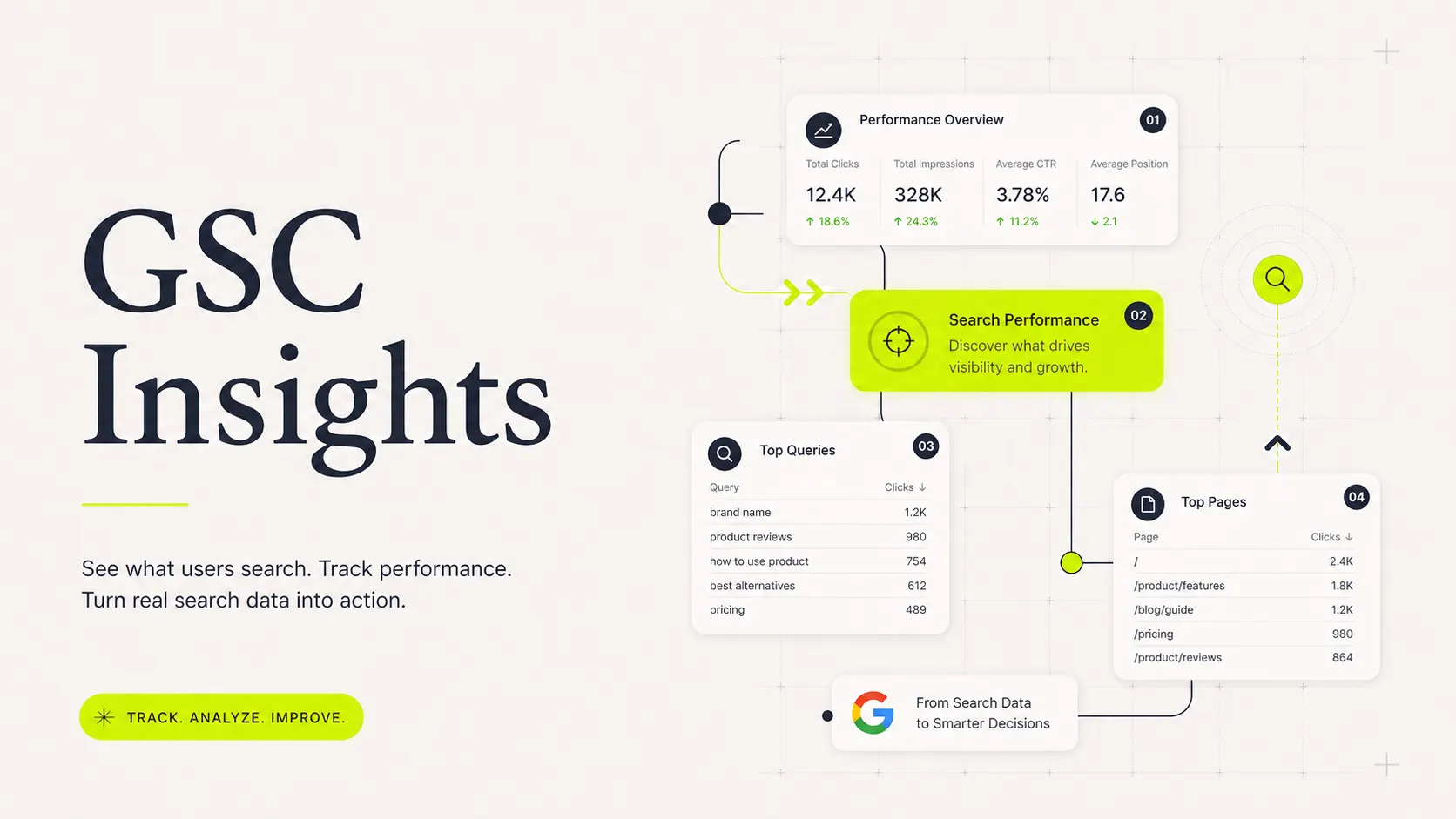
Start with queries already earning impressions in Google Search Console
Search Console shows the exact queries Google associates with your site—including ones you didn’t target. Queries with high impressions but low clicks, or pages ranking in positions 11–30, are the highest-leverage starting points. They prove Google already considers you relevant; you just need to satisfy the intent more completely to earn clicks and AI Mode inclusion.
Cluster real queries into AI Mode-ready topic groups
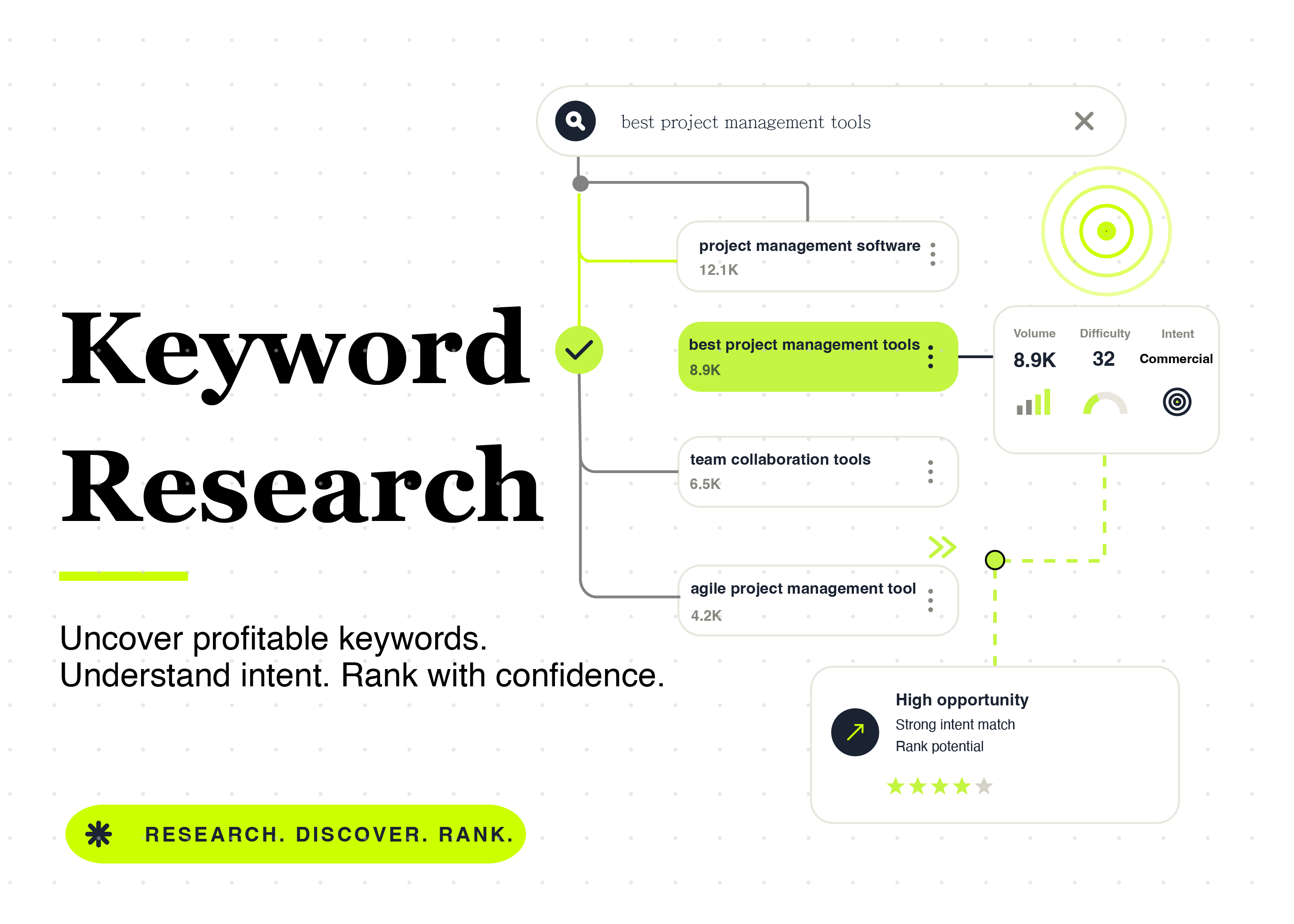
AI Mode rewards comprehensive topic coverage, not isolated keyword pages. Group related queries into clusters that map to a coherent answer set. Doing this from GSC data rather than generic keyword lists keeps clusters anchored to demand you can actually capture—our deeper explanation of keyword clustering with Google Search Console data compares the SERP-based, AI/NLP, and GSC-native clustering methods and when each fits.
Build briefs around intent, entities, citations, and internal links
Each brief should specify the dominant intent, the entities and sub-questions to cover, the citations and sources to reference, and the internal links that connect the page into your site architecture. This is where AEO and GEO become concrete: structured answer blocks and verified citations are what make a page citable. Our playbook on grounding AI search optimization in real search data goes deep on retrieval, schema, source trust, and the QA checklist that keeps AI-assisted content factual and citable.
Publish content with human review and factual QA
AI accelerates drafting but doesn’t replace editorial judgment. Every page needs a human review pass for accuracy, brand voice, and claim verification—especially because AI Mode favors trustworthy sources and penalizes thin or inaccurate content. Build a red-team QA step into the workflow before anything goes live.
Track AI citations, branded demand, CTR, and ranking movement after publication
After publishing, measure across both layers. Watch GSC for ranking and CTR movement on the target queries, track branded search demand as a signal of growing authority, and use an AI visibility monitor to check whether the new content earns citations in AI Mode and AI Overviews. This closed loop—plan from data, publish, measure, refine—is what compounds over time.
AI Mode SEO Software Scorecard: What to Test Before Buying
Run any shortlisted tool through these five tests during a trial. Score each 1–5 and weight by your team’s priorities.
Data quality: first-party signals vs scraped estimates
First-party GSC data reflects what Google actually does with your site. Third-party estimates infer it from samples and models. For prioritization decisions, first-party signals are far more reliable—a tool that recommends based on your real impressions and positions beats one guessing from aggregate volume. Score data quality high in your weighting; it propagates into every downstream decision.
Workflow coverage: research, brief, writing, publishing, and refresh
Map each tool against the full lifecycle. Monitors cover none of it; optimizers cover writing; GSC-first platforms like Dango cover research through internal linking and refresh. The fewer handoffs and exports your team has to manage manually, the faster you ship.
Reporting quality for executives and clients
Stakeholders want outcomes, not metric dumps. Test whether reporting ties AI visibility to business signals—traffic, branded demand, conversions—and whether agency users can white-label it. Dashboards that explain “so what” beat dashboards that just display numbers.
Ease of use for lean SEO teams
A powerful tool nobody uses is overhead. For small teams, time-to-first-value matters more than feature count. One-click GSC connection, automatic clustering, and ready-to-edit drafts shorten that path. Heavy suites can drown a two-person team in configuration.
Pricing tradeoffs by team size and domain count
Match pricing to scale. AI visibility monitors often charge by prompt volume or tracked keywords; suites charge by seats and projects; production tools charge by domains and output. A solo SEO might run a single $99/mo workflow tool plus a lightweight monitor; an agency needs multi-domain tiers and white-label reporting.
Which AI Mode SEO Software Should You Choose?
The right stack depends on your bottleneck. Use this decision tree.
If you need AI visibility monitoring only
You already produce content well and just need to know whether AI Mode cites you. Pick a focused monitor—Rankscale.ai, Otterly AI, or Peec AI—based on whether you prioritize URL citation accuracy, brand sentiment, or competitive share of voice.
If you need end-to-end content operations
Your bottleneck is producing prioritized, ranked content at speed. A GSC-first production platform like Dango handles discovery through drafting and internal linking, so your team spends time editing rather than exporting spreadsheets.
If you are an agency managing multiple client sites
You need multi-domain dashboards, white-label reporting, and repeatable workflows. Combine a broad suite (Semrush One or Search Atlas) for reporting with Dango’s Professional tier for fast, GSC-grounded production across client domains.
If you already have traffic but need better prioritization
This is the classic Dango fit: you have GSC baseline data and ranking pages, but you’re guessing what to create or refresh next. A first-party prioritization workflow turns that data into a ranked to-do list and ends the guesswork.
If you are starting with limited first-party data
GSC-first tools are less powerful when you have little data yet. Focus first on the foundational SEO framework for AI workflows —crawlability, relevance, and a handful of strong pages—to start generating impressions. Once GSC fills in, layer on a GSC-first workflow.
Common Mistakes When Buying SEO Software for AI Mode
The most expensive errors happen at the purchase stage, before any content ships.
Choosing an AI writer when the real problem is prioritization
Teams often buy a writing tool to “produce more content” when their actual problem is not knowing what to produce. More undifferentiated pages rarely improve AI Mode visibility. Fix prioritization first; volume without targeting compounds the problem.
Tracking prompts without connecting them to content actions
A dashboard showing you’re cited 12% of the time is interesting but inert unless it triggers specific content work. Every monitoring insight should map to a brief, a refresh, or an internal linking change—otherwise you’re paying to watch a problem you never solve.
Ignoring Search Console data in favor of generic keyword volume
Generic volume tells you what the market searches; GSC tells you what Google already associates with your site. Optimizing against third-party volume while ignoring your own impression data means chasing keywords you may never realistically win over ones you’re already close on.
Publishing AI-assisted pages without cannibalization checks
AI makes mass production easy, which makes cannibalization easy too. Two pages targeting the same intent split authority and confuse retrieval. Always check existing coverage—ideally with a site-aware tool—before adding another competing page.
Measuring AI Mode success only by citations instead of business outcomes
Citations are a leading indicator, not the goal. A spike in AI mentions that doesn’t move traffic, branded demand, or pipeline isn’t success. Tie AI visibility back to outcomes that matter to the business, or you’ll optimize for a vanity metric.
Recommended AI Mode SEO Stack for Lean Teams
You don’t need ten tools. You need one that produces grounded content and one that confirms it’s working.
Minimum viable stack for SaaS teams
A GSC-first production tool (Dango at $99/mo) plus one focused AI visibility monitor. The first turns your search data into ranked content with built-in internal linking; the second confirms whether that content earns AI Mode citations. That’s enough for most in-house SaaS content teams to operate a full closed loop.
Agency stack for reporting and execution
Agencies add a broad suite for cross-client reporting and competitive context—Semrush One or Search Atlas—layered over Dango’s Professional tier for multi-domain production. The suite handles the executive narrative; the production tool handles throughput across accounts.
When Dango should sit alongside AI visibility trackers
Dango and the monitors aren’t competitors—they’re complementary. Dango works upstream on the production decisions (what to write, how to structure it, how to link it) that determine eligibility; trackers work downstream confirming inclusion. Run them together: plan and publish with Dango, verify and refine with the monitor.
How to combine monitoring software with GSC-first content production
The combined loop is simple: discover opportunities and cluster from GSC, build grounded briefs and drafts, publish with human QA, then measure both GSC movement and AI citations. Feed what the monitor finds back into the next planning cycle. Over time, this first-party-grounded loop builds the topical authority that AI Mode rewards.
Frequently Asked Questions
Is AI Mode SEO software different from AI SEO software?
Yes, though they overlap. AI SEO software broadly includes AI writers, optimizers, and assistants. AI Mode SEO software specifically addresses visibility in Google’s generative search—tracking citations, brand mentions, and AI Overview presence—plus the content production that earns that visibility. AI Mode tooling is a focused subset concerned with generative-search outcomes.
Can traditional rank trackers measure Google AI Mode performance?
Only partially. They track organic positions, which still matter for eligibility, but most can’t detect whether your URL was cited in an AI Mode response or how your brand appears in generated answers. For full AI Mode measurement, pair a rank tracker with a dedicated AI visibility monitor.
What metrics matter most for AI Mode SEO?
URL citation frequency, brand mention rate and sentiment, share of voice across a relevant prompt set, and—on the GSC side—impressions, CTR, and ranking movement on target queries. Connect these to business outcomes like branded demand and conversions rather than treating citations as the endpoint.
How do AI visibility tools find brand mentions and citations?
They run sets of prompts through AI engines on a schedule, capture the generated answers, and parse them for citations (which URLs and domains are referenced) and brand mentions (where your name appears and in what context). Better tools track citations at the URL level and apply sentiment analysis to mentions.
Do I need separate software for AI Overviews and AI Mode?
Often the same tool covers both, since they share retrieval mechanics, but confirm coverage before buying. Some tools, like SE Ranking’s AI Overview Tracker, lead on AI Overviews specifically. AI Mode is conversational and harder to sample, so ask vendors how they capture it and how frequently.
Can Google Search Console show AI Mode traffic?
GSC reports clicks and impressions from Search, and clicks originating from AI experiences are increasingly folded into that data, but it doesn’t yet break out AI Mode as a distinct, fully labeled segment. Use GSC for query, position, and CTR signals, and a dedicated monitor to see citation-level AI Mode visibility.
How often should teams check AI Mode visibility?
Weekly or biweekly is sufficient for most teams—AI answers shift, but daily checking rarely changes decisions. Check more frequently around major content launches or after publishing on a priority cluster to catch movement early. Align the cadence with your content production cycle.
Is AI Mode SEO software useful for small SaaS teams?
Yes, if you choose for time-to-value. A lean team benefits most from a GSC-first production tool that turns existing search data into a prioritized plan, plus a lightweight monitor. Avoid heavy suites that require extensive configuration—they tend to become shelfware for small teams.
Should agencies use different AI Mode SEO tools than in-house teams?
The needs differ more than the tools. Agencies require multi-domain management, white-label reporting, and repeatable workflows across clients, so they lean on broad suites plus a scalable production tier. In-house teams can run a simpler stack focused on their single domain. The underlying GSC-first methodology stays the same for both.